
Life is so busy these days that it’s easy to leave your checking account on autopilot. Your income flows in, your bills go out, and maybe you’ll have something extra in there at the end of each month. Hopefully those extra funds accumulate over time and give you a financial cushion you can use in case of an emergency. While those funds can help your financial security, it’s possible to have too much money in a checking account if you’re missing out on interest payments that you could earn in a savings account.
Some of our customers have asked us: “How much money should I keep in my checking account?” There really isn’t a one-size-fits-all approach to money management, so the answer depends on your monthly budget and how much you can save each month.
Your Checking Account Wasn’t Designed to Hold Savings
Checking accounts are built for transactions, not an accumulation of funds. When you open a checking account, it’s designed to help you deposit paychecks, pay bills, and withdraw cash for everyday spending, not to grow your savings over time.
Unfortunately, most checking accounts earn little to no interest. With checking accounts that do earn interest, the national average annual percentage yield (APY) is practically zero. When it comes to checking accounts vs savings accounts in West Virginia, every extra dollar in your checking account is just idle money that isn’t earning interest.
You’re Probably Spending More Than You Realize
One of the reasons our customers move money from checking to savings is because the more money they have in their checking account, the more likely they are to spend on impulse purchases and things they don’t really need. Research shows that people with access to funds in their checking accounts spend more without noticing. It’s a bit like keeping too much cash in your pocket when shopping or spending a night out with friends. It can be far too easy to get carried away and spend that financial cushion rather than saving it for your future needs. If you move money from checking to savings and only use your checking account for your everyday spending, you’ll be more likely to save and less likely to splurge.
You Could Be Missing Out on Your Own Savings Goals
When considering how much to keep in a checking account vs savings account, part of this depends on your savings goals and your needs. It’s recommended that every household have two to three months of living expenses set aside as an emergency fund, preferably in a savings account so you would be less likely to spend it and can earn interest on what you save. In addition to an emergency fund, your goals might include saving up for a vacation, holiday spending, or someone’s education. These funds would all grow faster in a dedicated savings account.
Inflation Is Eating into Your Funds
While rising costs can make it harder for you to save, it’s hitting your checkbook even more if you’re not earning interest on those funds.
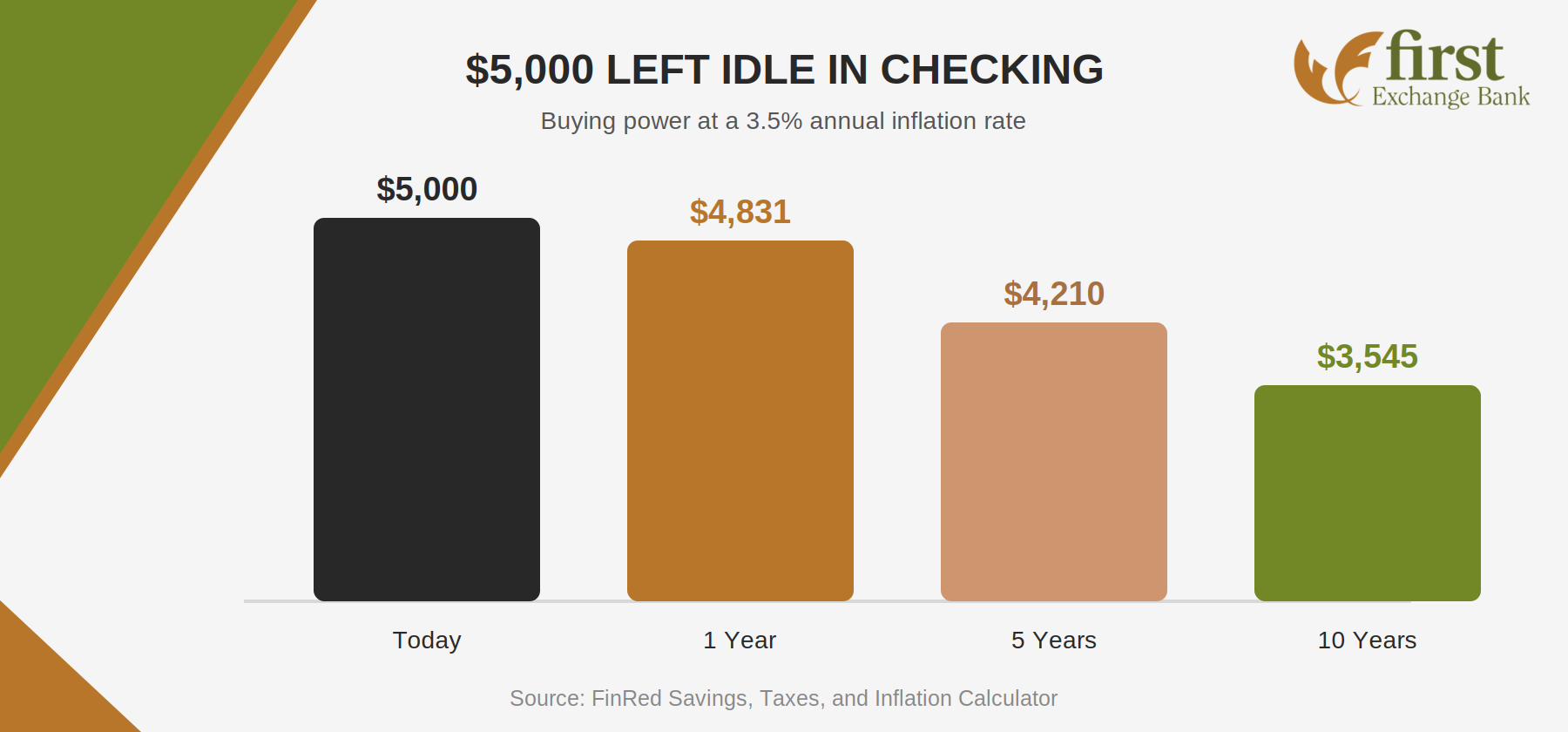
The annual inflation rate was 4.2% in May 2026 and 3.5% in June 2026, according to the Bureau of Labor Statistics. If we crunch these numbers with an online financial calculator, it shows just how much this can impact your checkbook. For example, if you had $5,000 in your checking account with an annual inflation rate of 3.5%, in just one year that money would be worth $4,831. It would be worth just $4,210 in five years and $3,545 in 10 years. Of course, your money could lose even more buying power if we get another surge of inflation.
The more funds you keep in an interest-bearing savings account, the better off you’ll be in the long run because you can earn interest and reduce the impact of inflation. Leaving most of your money in a checking account, where you’re not earning interest, is like slowly throwing away part of your savings every month.
Fraud Risk Is Real, and Checking Accounts Are the Front Door
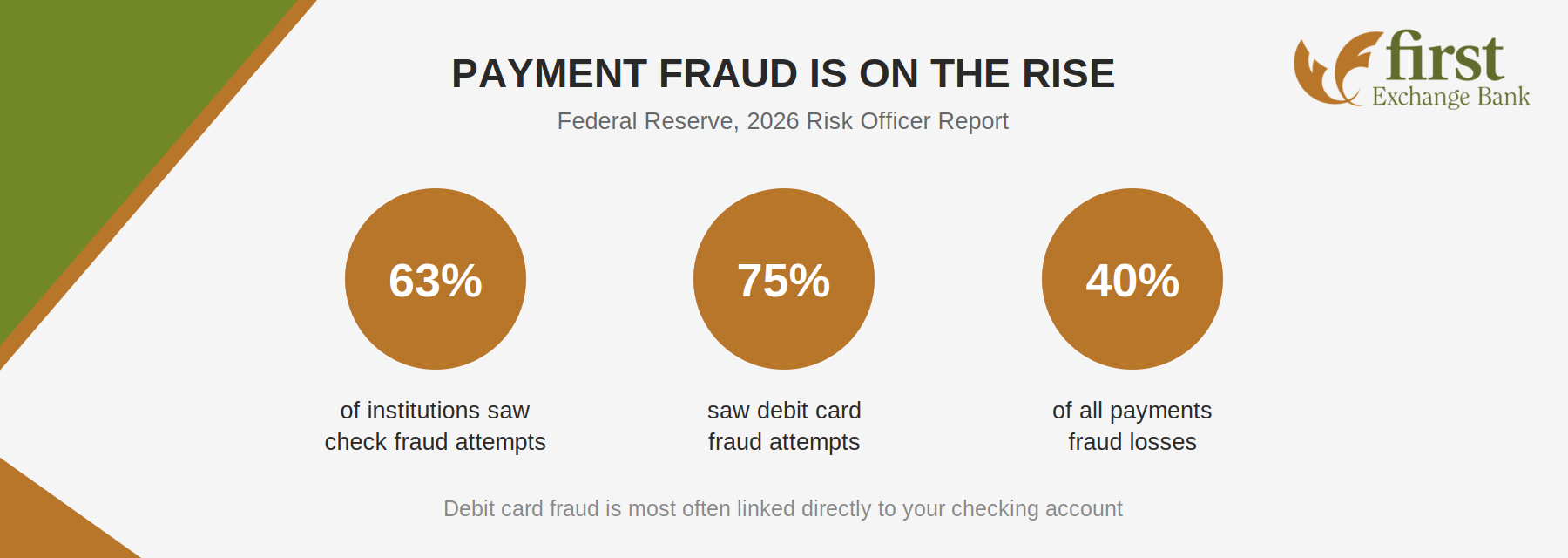
Fraud and scams are on the rise. A recent report from the Federal Reserve indicated that 63% of financial institutions reported check fraud happening to some of their customers, with significant increases in counterfeit checks, check washing, and forgery. Debit card fraud is the most widespread type of fraud, with 75% of financial institutions reporting debit card fraud attempts, and it’s responsible for 40% of their total payments fraud losses.
Debit card fraud includes skimming, where criminals hack into point-of-sale (POS) terminals, gas pumps, and other devices to steal each card’s data. They use that information to create debit card forgeries that they can use to steal your money. Most people link their debit card transactions to their checking account, so the more money you keep in your checking account, the higher the risk you face if someone manages to steal your card’s info.
By limiting the amount you keep in your checking account to what you need just for your monthly expenses, you can reduce your level of risk and the amount that someone could steal from you.
So How Much Should Actually Be in Checking?
A general rule of thumb is to keep one to two months of your living expenses in your checking account, plus a small buffer. Any amount beyond that should be kept in an interest-bearing account, such as a savings account. Take a close look at your expenses over the past few months, including your fixed expenses (rent/mortgage, insurance) and your variable expenses (food, transportation, utilities, etc.) and get a general range of how much you spend every month. Set a target balance for your checking account and for anything beyond this, move it to a savings account where you can earn interest.
Where Should the Rest Go?
We offer many options for savings accounts in West Virginia, and all of these include free online banking and use of our mobile banking app:
- Statement Savings: Our traditional savings account is great account to park your extra money to keep it separate from your spending while earning interest. You also have easy access to your money at any time with free withdrawals and deposits, and you can direct deposit right into your account.
- Christmas Club Account: Save up for the winter holidays with just a $10 minimum opening deposit and earn a fixed, competitive interest rate throughout the year. Your holiday funds will automatically transfer into the account of your choice in time for your holiday spending. Add up what you intend to spend over the holidays and divide that by the number of months you have until they arrive. That’s how much you’ll need to save each month to meet your goals, and we’ll help your efforts with a favorable interest rate.
- Certificates of Deposit (CDs): With just a $500 minimum opening deposit, you can lock in a guaranteed interest rate on CDs ranging from 91 days to 72 months (six years). These are great for funds you won’t need for a certain period of time. Some of our customers keep part of their savings in a regular savings account or money market account, and they put the rest of it into CDs of different term lengths. They do this with the idea that if they have a financial emergency, they could use what’s in their savings account until one of their CDs comes to term. CDs can also be useful if you have a target date in mind, such as saving up for a down payment on a home, a wedding, or some other expense. You could still keep your emergency funds in a savings account, while putting goal-oriented funds into CDs that will come to term when you need them.
Let Your Money Work for You With A Savings Account In West Virginia
Ready to put your extra checking account balance to work? Talk to a First Exchange Bank team member about the right savings account for your goals, or open one online today. If you have any questions or would like to get started, please visit your local First Exchange Bank in White Hall, Mannington, Fairmont, Fairview, Hundred, Morgantown-Suncrest, and Morgantown-Pierpont Landing or contact us today. Join the countless residents of North Central West Virginia who trust us as their banking partner and start experiencing the local bank difference today!