First Exchange Bank now offers person-to-person payments through Zelle, conveniently located within our own banking app. You can use this to send funds to friends and family members and those you do business with, such as dog walkers and babysitters, and transfers can be made in minutes.
How Zelle Works
Using Zelle is easy. All you need is the other person’s email address or U.S. cell phone number, and money moves directly between bank accounts, usually within minutes. If the recipient isn’t already enrolled with Zelle, they can sign up through their own bank or credit union, as long as that institution participates in the Zelle network. To get started, open the First Exchange Bank app, select Zelle on the bottom menu, and enroll your email address or cell phone number.
Of course, with any type of financial transaction, you’ll need to be careful to make sure you avoid getting scammed, especially when sending money electronically. Zelle payments are made quickly and are generally not reversible. It’s sort of like giving digital cash to someone through your phone. Our customers have been asking us, “Is Zelle safe?” The answer is it can be perfectly safe as long as you only use the app to send money to someone you know, confirm someone’s details before you engage in a financial transaction with them, know how to spot a Zelle scam before it happens, and avoid making rushed decisions.
Common Zelle Scams to Watch For
Financial and payment scams are on the rise, including those involving Zelle. A report last year by the Pew Research Center revealed that 73% of American adults had experienced some kind of scam attempt online, with 61% receiving some kind of text message scam at least once a week, with someone trying to steal their personal information or get access to their accounts. Avoiding Zelle scams and other types of fraud involves knowing how to spot a scam in the first place, taking the time to verify any requests for money or personal information, verifying a recipient’s information, and only using the app to send money to someone you know.
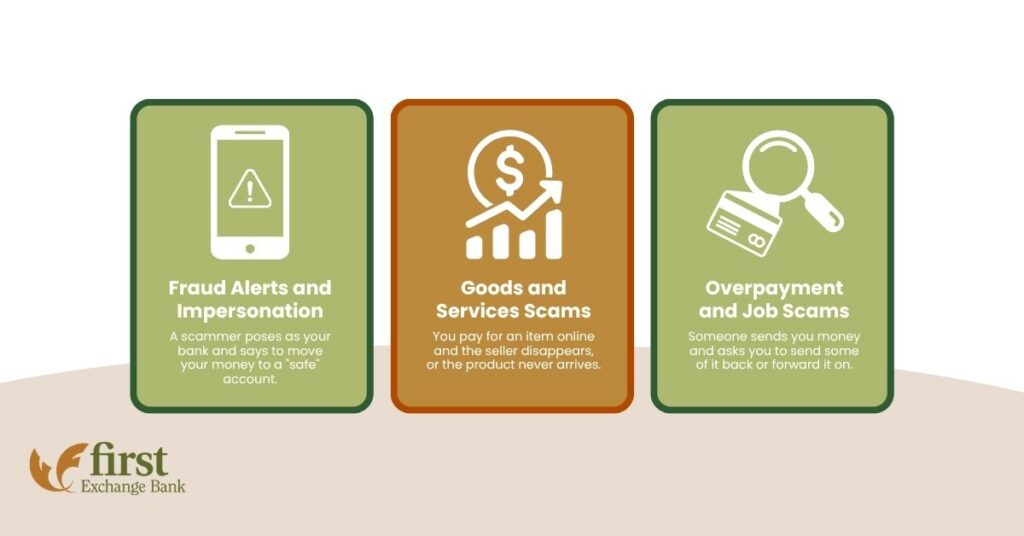
Fraud Alerts and Impersonation Scams
A scammer sends you a message through text or email, claiming to represent your bank or law enforcement. Sometimes they might call you as well. The scammer claims one or more of your accounts have been compromised and you need to move your money to a “safe” account to keep it from being stolen. If you fall for this scam, you’ll send money to the scammer’s account and probably never see it again.
Zelle and other peer-to-peer (P2P) payment methods are frequent targets of texting and imposter scams. In fact, imposter scams were the most commonly reported type of fraud last year, according to the Federal Trade Commission (FTC), with Americans reporting $3.5 billion in total losses, including nearly $1 billion tied to scammers posing as businesses such as banks.
Goods and Services Scams
Online shopping portals like Facebook Marketplace, eBay, and Etsy can be a great way to find deals on all kinds of goods, but scammers like to use them by claiming they have something for sale. Once they receive your payment, they disappear, and the product never arrives.
Overpayment and Job Scams
In this scam, someone sends you money, whether it’s a stranger claiming they “accidentally” sent funds to your account, an “employer” for a job offer that sounds too good to be true, or a check that turns out to be fake, and then asks you to send some or all of it back or forward it to someone else. By the time the original payment bounces or is reversed, you’ve already sent your own money to the scammer, and it’s gone for good.
Why Zelle Payments Are Different From a Card Purchase
While Zelle is great for sending digital payments, you really should treat it as cash that you would only give to someone you know and trust, such as a friend or relative. It’s not the same as a credit card, which includes purchase protection or guaranteed refunds for payments involving a scam.
With a credit card, even if you authorized a payment yourself (because you fell for a scam), you probably wouldn’t be responsible for the payment, and your credit card provider would cover the loss. Zelle doesn’t offer that same blanket protection: since you authorized the payment yourself, most scams aren’t eligible for a refund.
Smart Habits Before You Send
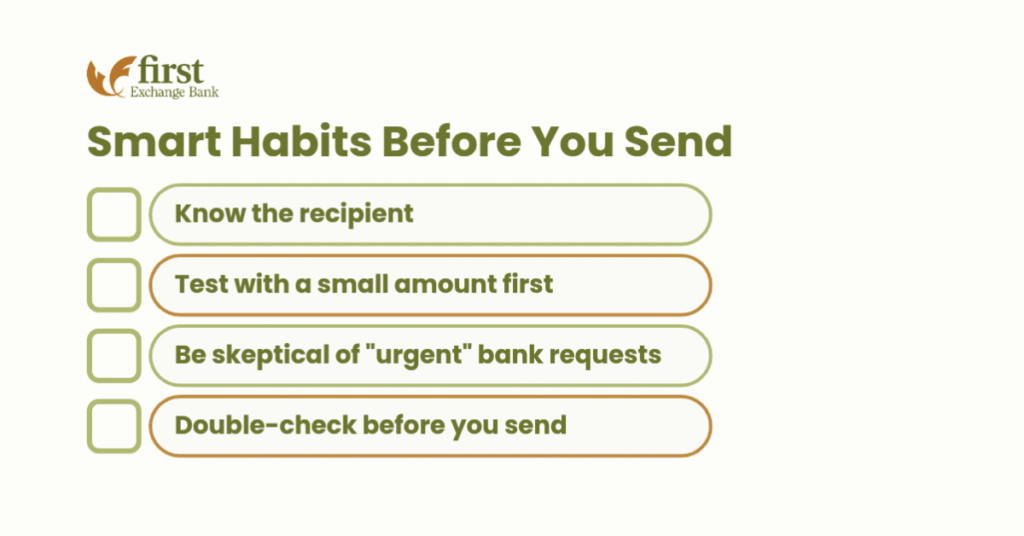
To protect yourself from Zelle scams, and from P2P scams in general, only send money to someone you know and trust, and make sure you have the right contact information for them. Just being one digit off on their cell number could result in you sending money to the wrong person. Just imagine a stranger receiving a text from you saying you accidentally sent them money. They might think you’re trying to scam them and could wind up just keeping the money.
If you’re sending money to someone new, even if you know the person, you might start by sending just a small amount to make sure the right person receives it, just like you might send a short message to someone through text or email to confirm you have their right contact information.
Be skeptical of any “urgent” requests claiming to be from “your bank.” First Exchange Bank will never ask for your login credentials, one-time passcodes, or account information over the phone or by text. If you receive a text, email, or phone call from someone claiming to be from your bank or law enforcement, and they want you to do something immediately, take the time to call this institution at a number that you know to be legitimate. Scammers are also getting more convincing with the help of AI-generated voices and messages, so when in doubt, hang up and call back on a number you trust. For more on this, check out our post on How to Avoid AI Payment Scams. You can also find more general fraud-prevention tips on our Safety and Security page.
What to Do If You Think You’ve Been Scammed
If you have any reason to think someone is trying to scam you, or if you’ve already been scammed, contact First Exchange Bank immediately using the number on the back of your debit card. You can also reach us using the contact page on our website or by calling 304-534-7200. We suggest keeping these numbers stored in your contacts list so you can reach us as fast as possible. Don’t call the number included in a suspicious text or email. Acting quickly gives you the best chance of recovering your funds and stopping additional losses.
You can report text message scams, including Zelle message scams, by forwarding them to the FTC: 7726 (SPAM) or through the FTC’s webpage for reporting fraud. You can also report scams to the FBI’s Internet Crime Complaint Center (IC3). You might also reduce your odds of receiving a scam message by blocking known spammers using Apple’s iMessages app or the Google Messaging App (for Android users).
Enroll In Zelle and Start Sending Money Today
Zelle is a safe, convenient tool when used to transact with people you know and trust. Of course, with so many scammers out there, a bit of caution and taking the time to confirm someone’s information can help you avoid some of the most common scams. Enroll in Zelle through the First Exchange Bank app, and please contact us directly with any questions about a suspicious request for payment or