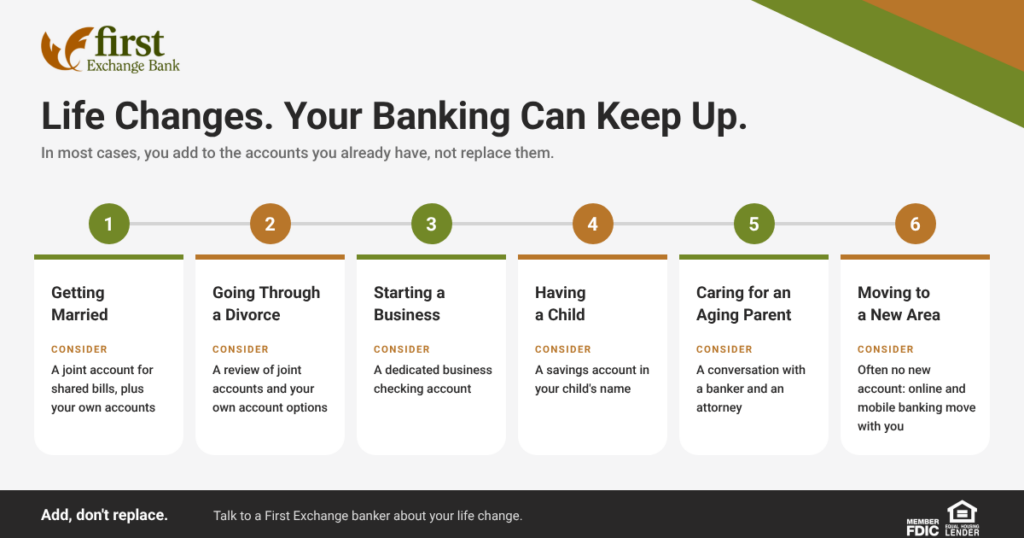
Life changes, and your banking often needs to change with it. Getting married, going through a divorce, starting a business, having a child, or caring for an aging parent can all be good reasons to open a new or additional account, and in most cases that means adding to what you already have, not replacing it.

Getting Married
A U.S. Census Bureau report found that in 2023, 77% of married couples with bank accounts held at least one type of joint account, down from 85% in 1996. The decline may reflect couples marrying later in life, once they’re both already financially established.
There’s no one right way to organize your accounts once you’re married. Plenty of couples keep a joint checking account for the shared bills and hold on to their own accounts too, while others do it differently, as long as it feels fair and open to both of you. And if you have bigger balances, there’s a bonus: FDIC insurance covers each account holder up to $250,000 per ownership category, so individual accounts plus a joint account can add up to more combined coverage than either of you would have alone.
Going Through a Divorce
If a marriage ends in divorce, your banking relationship likely needs to be reviewed, such as any joint accounts. Because either owner can usually access the full balance, it helps to talk with your attorney about the best way to handle them. Many people also choose to open a checking account in their own name, giving them one simple place for their paycheck and bills.
A few small updates can make the transition smoother: redirect direct deposit, move automatic payments, review beneficiaries, and refresh online banking passwords. There’s reassuring news on FDIC insurance, too. Each person’s individual accounts are insured up to $250,000 on their own.
Every situation is different, so your attorney can guide you on the legal side. A First Exchange banker can help with the account side and make the process feel a little more manageable.
Starting a Business, Even a Small One
If you’re thinking about starting a business, most financial and tax advisors will tell you to keep business and personal finances separate from day one. You might be able to keep it all straight in your head today, but that gets harder by tax time. A dedicated business checking account makes tax prep easier and puts you in better shape if the IRS or the West Virginia Tax Division has questions about your return.
If you plan to operate under a different name, such as a “doing business as” (DBA) name, you’ll need to register that name with the West Virginia Secretary of State. West Virginia doesn’t require a separate account for a DBA, but you will need an account in that name to deposit checks made out to it. If your business is registered as an LLC, a separate account matters even more: mixing personal and business funds can undermine the liability protection an LLC is supposed to provide. Our Business Checking page can help you compare options.
Having a Child
You can open a savings account in your child’s name at any age, both to start saving for their future and to teach them how money works. Interest earned on the account is taxable income, though a small balance typically earns very little. For tax year 2026, a child who can be claimed as a dependent generally has to file a federal return only if their unearned income, such as interest, is more than $1,350. Check the current IRS rules or ask a tax professional about your situation.
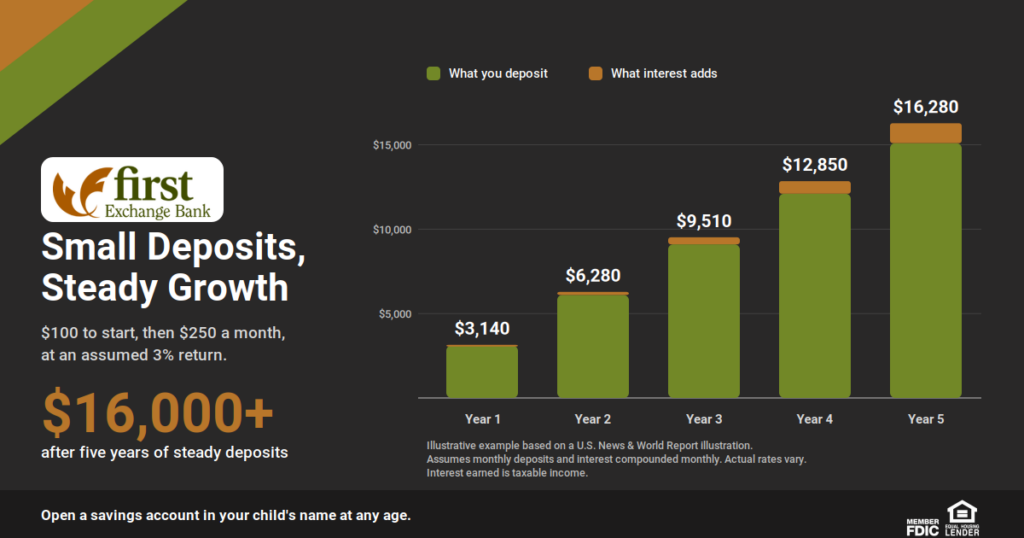
A recent U.S. News & World Report piece noted that starting a child’s savings account with $100 and adding $250 a month could grow to more than $16,000 over five years, assuming a 3% return. This is a helpful illustration of how steady, automatic deposits add up, even if actual rates will vary.
Caring for an Aging Parent
As parents age, they may want a child’s help managing their finances. There are a few ways to structure this, from granting power of attorney to adding a child as a joint owner or as a signer on an account, each with different implications for control, taxes, and what happens to the account after a parent passes away. We’ve covered these options in more detail in our earlier piece, “Early Family Planning for Elder Parents.”
Because these choices touch on estate planning, taxes, and legal liability, they’re worth working through with both a banker and an attorney rather than deciding on your own. A First Exchange banker can walk you through what’s available on the account side, and an attorney can help make sure the structure fits your family’s broader estate plans.
Moving to a New Area
People used to change banks nearly every time they moved, especially across state lines. These days, advances in technology make it possible to bank from almost anywhere. First Exchange offers that flexibility through our online banking portal, which lets account holders manage their accounts, pay bills, transfer funds, and download statements from anywhere with an internet connection, and our mobile app, which adds mobile check deposit. A move doesn’t automatically mean you need a new account.
Talk to a First Exchange Banker About All Your Life Changes
Whether to open a new account is a personal decision based on your own needs and your family’s. Wherever you are in life, a First Exchange banker can help you figure out how many accounts make sense and walk you through the options. Visit us in White Hall, Mannington, Fairmont, Fairview, Hundred, Morgantown-Suncrest, or Morgantown-Pierpont Landing, or contact us to set up an appointment.